
The Ultimate Guide to Lightweight Backpacking Tents (2026)

Table of Contents
The Evolution of “Light”
Lightweight backpacking tents in 2026 typically weigh between 1kg and 2kg (2.2–4.4 lbs), compared to older models that exceeded 5kg.
This shift defines modern lightweight backpacking tents as gear that minimizes pack weight without compromising weather protection or durability.
The biggest change is not just weight; it’s efficiency. Advanced fabrics, smarter pole geometry, and better space utilization mean today’s ultralight tents offer more livability than ever.
While trade-offs still exist, with higher prices or slightly reduced interior space, 2026 innovations such as PFAS-free coatings and higher-denier fabrics have significantly narrowed the gap between comfort and minimalism.
What to Look For
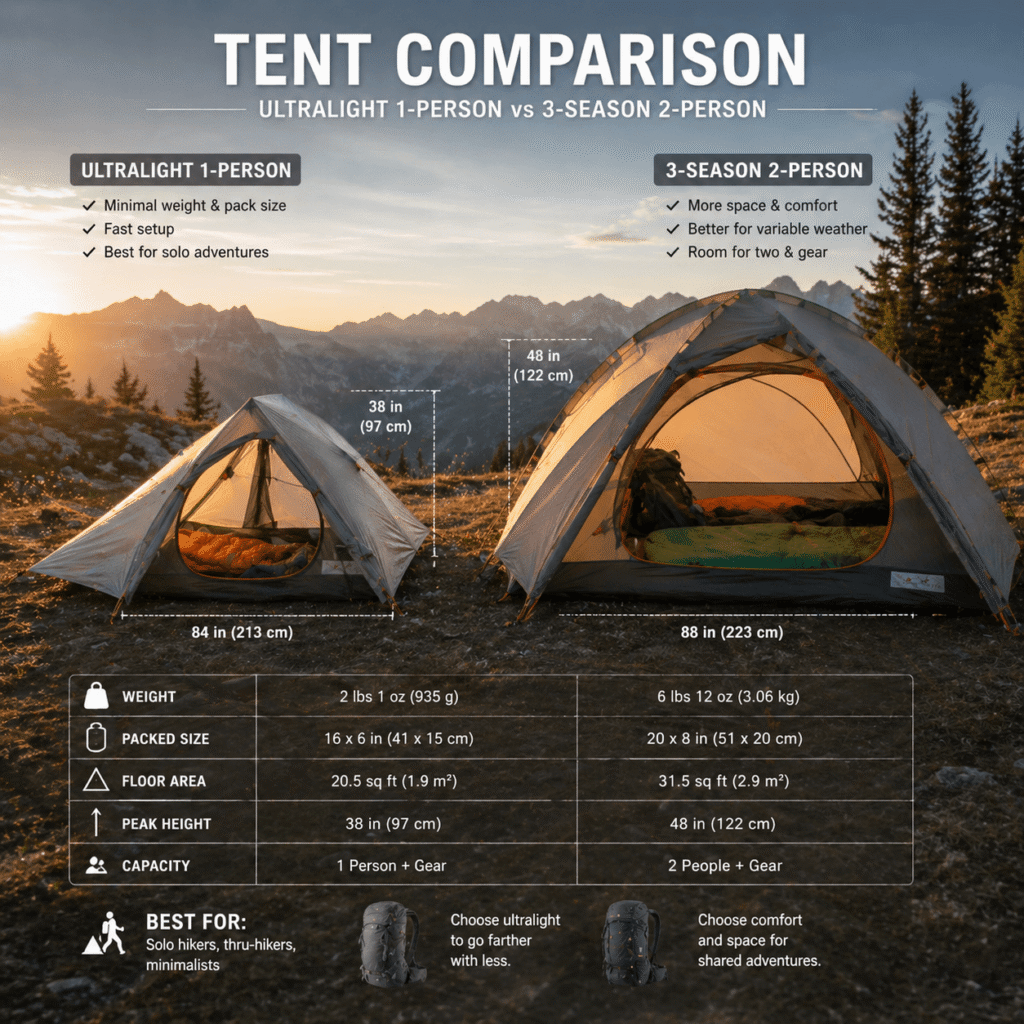
Weight vs. Livability
Lightweight backpacking tents are lighter because they reduce material, but livability still matters. Key metrics include:
- Floor space (berth area)
- Peak height (headroom)
- Vestibule area (gear storage)
A 1kg tent with poor headroom can feel restrictive during long trips, especially for thru-hiking. Balance is critical.
Season Ratings
Most hikers should choose 3-season tents, which handle rain, wind, and mild cold.
- 3-season: Best for versatility and weight savings
- 4-season: Built for snow load, but significantly heavier
Waterproofing (Hydrostatic Head)
Hydrostatic Head (HH) measures waterproof performance.
- 2,000mm–3,000mm: Standard rain protection
- 3,000mm–5,000mm: Heavy rain durability
In 2026, coatings are more eco-friendly (PFAS-free) while maintaining performance.
Freestanding vs. Non-Freestanding
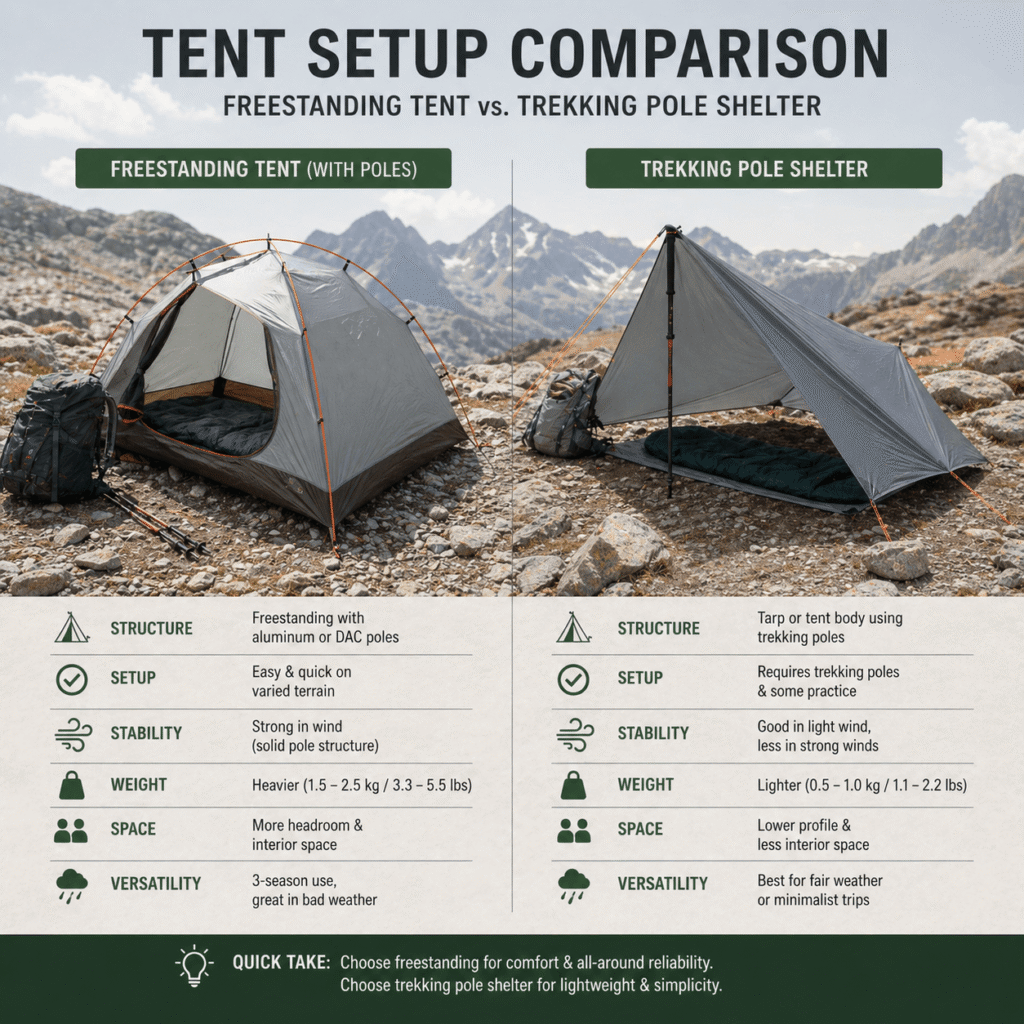
Freestanding Tents
Freestanding tents use a dedicated pole system.
Pros:
- Easy setup on any terrain
- Better structure in rocky or hard ground
Top 2026 Pick: Big Agnes Copper Spur UL2/UL3
These tents prioritize user experience and are ideal for beginners.

Non-Freestanding (Trekking Pole Shelters)
These rely on trekking poles instead of traditional frames.
Pros:
- Lowest possible weight
- Compact packing
Top 2026 Picks:
These are favored for ultralight (UL) setups and long-distance hiking.
Top-Rated Lightweight Tents of 2026
Best Overall
Big Agnes Copper Spur UL3
- Weight: ~3.8 lbs
- Interior: 41 sq ft
- Feature: PFAS-free “Hyperbead” nylon
This tent balances weight, durability, and interior space better than most competitors.
Best for Thru-Hiking
- Weight: 14.9 oz
- Material: Dyneema (DCF)
It doesn’t sag when wet and excels in long-distance trails where every gram matters.
Best Budget Option
- The North Face Trail Lite 2 (~$360)
- Six Moon Designs Lunar Solo (~$260)
These models provide strong value without sacrificing essential performance.
Best for Tall People
- MSR Hubba Hubba NX 2
- Vaude Hogan SUL
These tents feature longer floor dimensions and higher ceilings for improved comfort.
| Tent Model | Weight | Price Range | Best Use Case |
|---|---|---|---|
| Copper Spur UL3 | 3.8 lbs | $535 | All-around |
| Zpacks Duplex Lite | 0.93 lbs | $699 | Thru-hiking |
| Trail Lite 2 | 4.5 lbs | $360 | Budget camping |
| Lunar Solo | 2.6 lbs | $260 | Ultralight budget |
| Hubba Hubba NX 2 | 3.9 lbs | $520 | Comfort-focused |
Advanced Materials: DCF vs. SilPoly
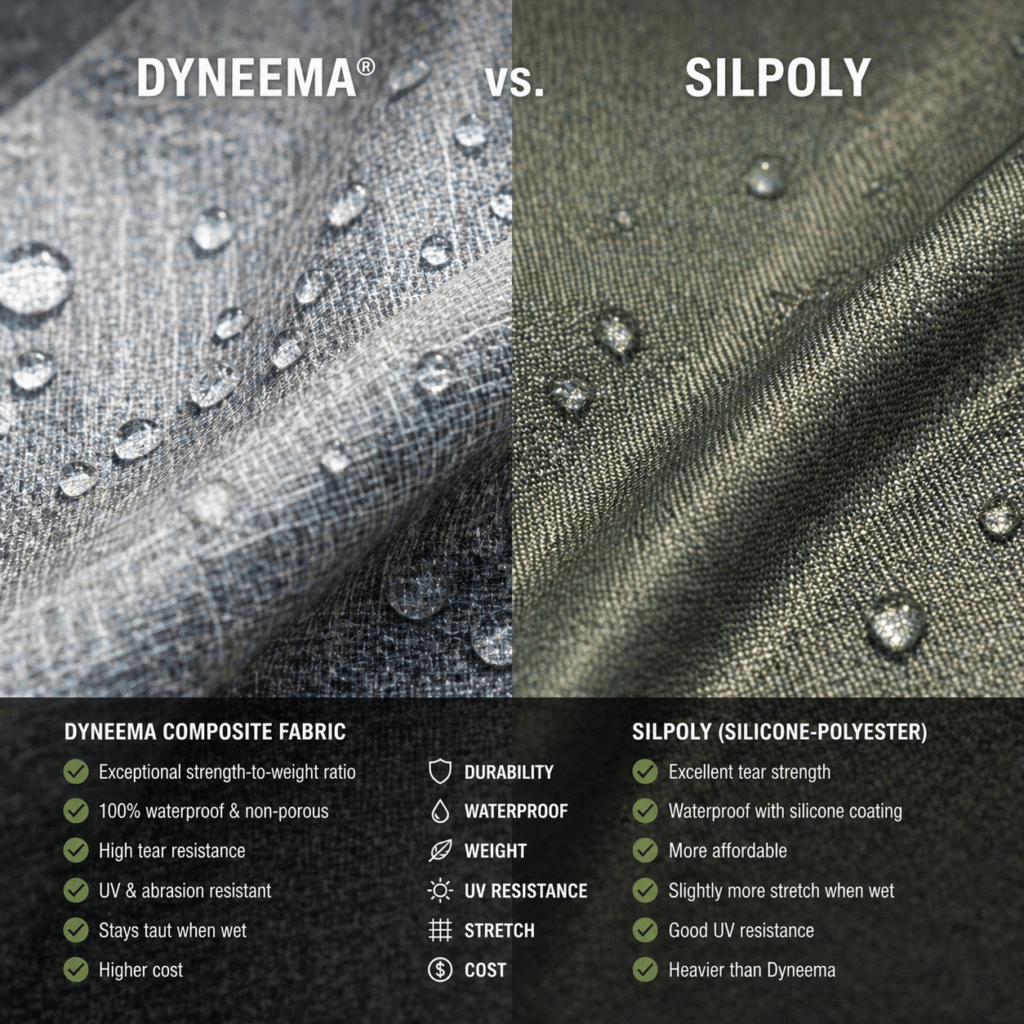
Dyneema (DCF)
Dyneema Composite Fabric is:
- Extremely lightweight
- Fully waterproof
- Resistant to sagging
Downside: high cost.
SilPoly (Silicone Polyester)
SilPoly is now a 2026 favorite because:
- It resists stretching when wet
- Maintains tension better than silnylon
- Offers a balance of cost and durability
This makes it ideal for most backpacking gear 2026 setups.
Practical Tips: Setup & Maintenance
Pitching in Wind
Always:
- Use all guy-lines
- Position tent behind natural windbreaks
- Orient the lowest profile side toward wind
Condensation Management
Condensation is unavoidable but manageable:
- Use double-wall tents when possible
- Look for high vents in single-wall designs
- Keep airflow consistent
Features like vestibule spacing and peak vents improve interior dryness.
Choosing Your Home Away From Home
The best lightweight backpacking tent depends on your trip type. Choose ultralight designs for long-distance hikes and prioritize space and comfort for weekend trips.
In 2026, you no longer need to sacrifice safety to reduce weight; you only need to choose wisely.
