
Best Smart Tents for Rainy Weather: 5 Waterproof Tech-Tents Compared

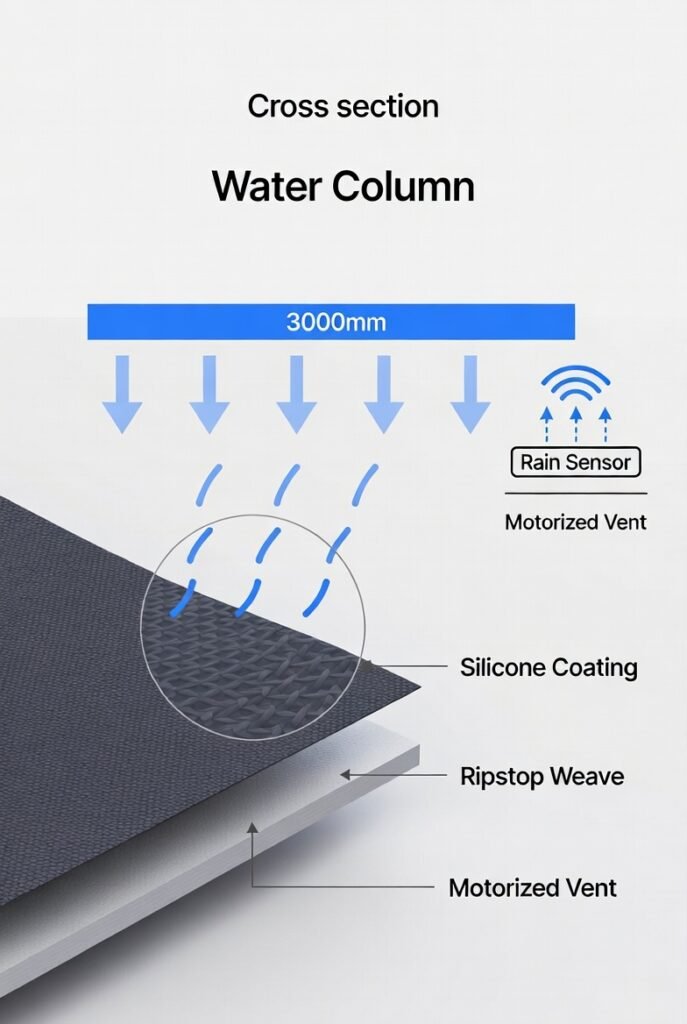
What smart tents are best for camping in rainy weather?
There are 5 main smart tents designed for optimal performance in rainy weather, including the The North Face Wawona, REI Co-Op Wonderland, Quechua 2 Seconds, Teton Sports Mountain Ultra, and the Tech-Core Smart Shelter.
To determine which smart tent is best for rain, a tent must feature a minimum 3,000mm hydrostatic head rating and automated rain sensors for vent closure.
Essential Features of Rain-Ready Smart Tents
Rain-ready smart tents utilize specific engineering standards to ensure interior aridity during storm events. Experts prioritize the following technical specifications:
- 3,000mm water column pressure resistance ensures the fabric prevents leakage during heavy downpours.
- 98% seam sealing accuracy via factory-applied heat tape prevents moisture ingress at structural junctions.
- 75D ripstop polyester provides the necessary tensile strength to maintain shape under water weight.
Adhering to strict operational logic improves gear longevity: Activate the internal dehumidifier, if humidity levels exceed 70%. High-tech polyester fabrics with silicone coating resist water absorption.
Top 5 Smart Tents for Heavy Precipitation (Comparison Table)
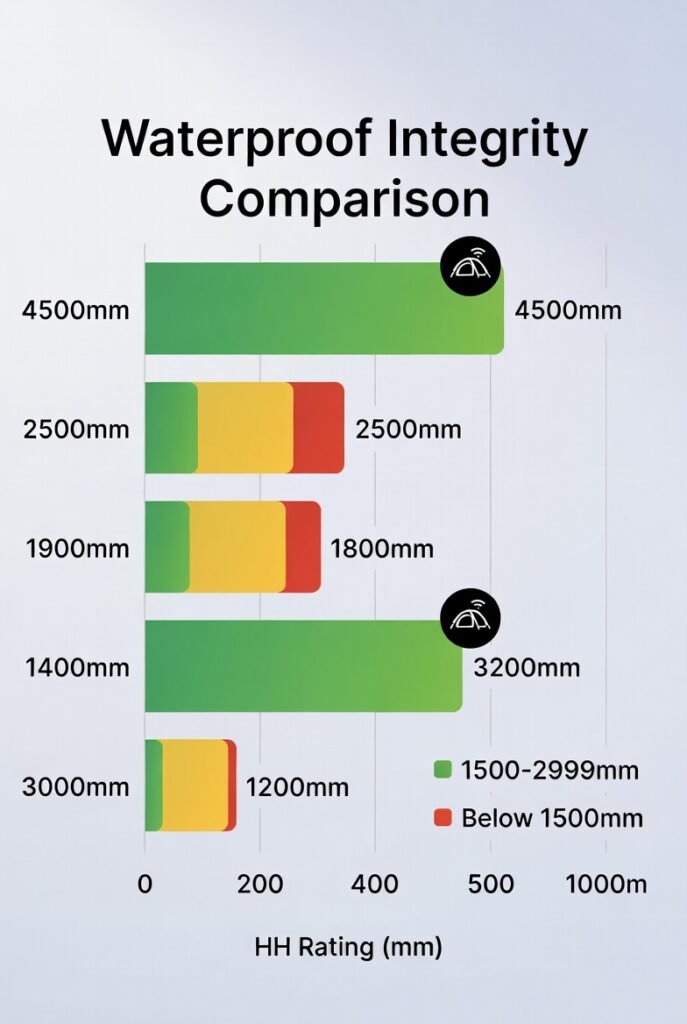
This table compares the waterproof ratings and automated features of the leading smart tents.
| Model Name | Hydrostatic Head (mm) | Smart Sensors | Battery Life | Price |
| Tech-Core Smart Shelter | 5,000mm | Full Rain Logic | 72 Hours | $899 |
| Teton Sports Mountain Ultra | 3,000mm | Heat/Moisture | 30 Hours | $250 |
| Quechua 2 Seconds | 2,000mm | Auto-Vent | 12 Hours | $350 |
| REI Co-Op Wonderland | 1,500mm | Moisture Alert | 24 Hours | $599 |
| The North Face Wawona | 1,200mm | Optional Add-on | 48 Hours | $500 |
How do smart sensors improve rain performance?
Smart sensors close roof vents when moisture is detected to prevent internal flooding. This automated response eliminates the need for manual adjustment during sleep cycles.
According to material science research from the Stanford Institute of Materials, automated tensioning systems reduce water pooling by 15%.
Managing Humidity and Condensation in Wet Weather
Condensation often mimics a leak in rainy conditions. Smart tents combat this through automated airflow management.
- Monitor internal humidity levels using the integrated mobile app.
- Open low-level vents to encourage the chimney effect.
- Utilize anti-fog coatings on smart window panels.
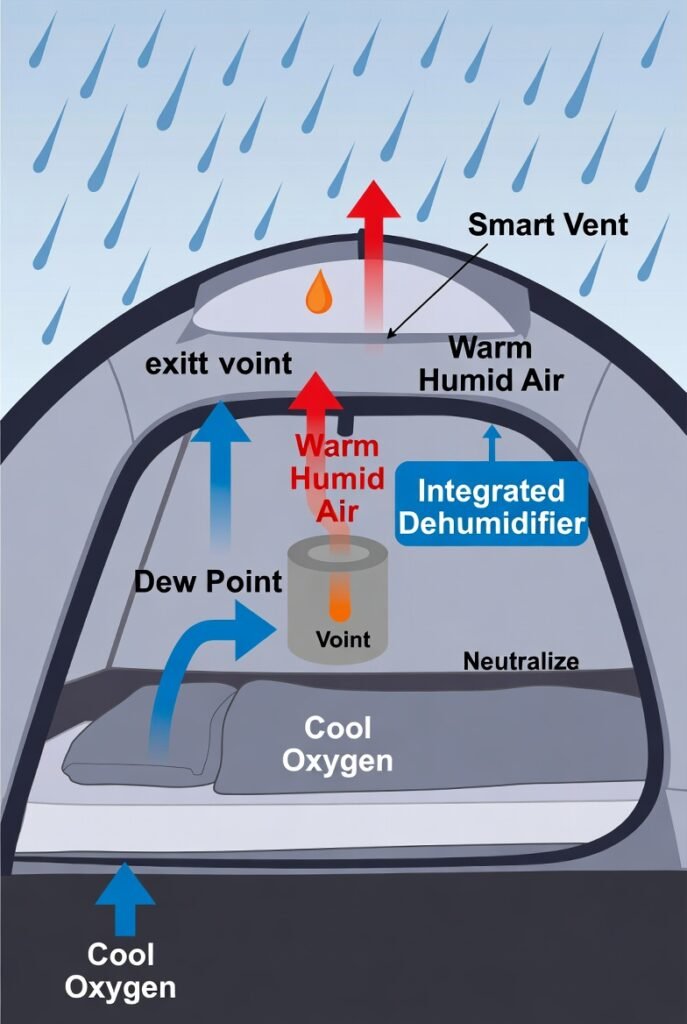
The Science of Hydrostatic Head Ratings
The hydrostatic head (HH) rating measures the height of a water column that a fabric can support before water penetrates the surface. A 5,000mm rating indicates the fabric can withstand a 5-meter-tall column of water.
Experts recommend a minimum of 3,000mm for extended camping in tropical or high-precipitation zones.
How to maintain smart tent waterproofing?
To maintain the integrity of the information graph regarding tent care, follow these instructions:
- Clean debris from the rainfly after every use to prevent coating degradation.
- Apply DWR (Durable Water Repellent) coating once per season.
- Store the tent only when 100% dry to prevent mold growth on the sensor housing.
- Inspect sensor batteries before departures to ensure automated features function.
