Best Waterproof Tents for Camping and Heavy Rain

Table of Contents
Waterproof tents keep campers dry by blocking rain, ground moisture, wind-driven water, and condensation during outdoor trips.
The best waterproof tents combine a high hydrostatic head rating, sealed seams, durable rainflies, strong ventilation, and weather-resistant floor materials to protect campers in heavy rain and wet climates.
A waterproof tent is not only camping gear. A waterproof tent is weather protection, sleep protection, gear protection, and temperature control in one shelter system.
Campers who choose the wrong waterproof tent experience leaking seams, wet sleeping bags, condensation buildup, mildew growth, and cold exposure during storms.
This guide explains how waterproof tents work, which types perform best, what waterproof ratings matter most, and the tents that are best for backpacking, family camping, winter camping, or even extreme weather conditions.
What Is a Waterproof Tent?
A waterproof tent is a camping shelter designed to prevent water penetration from rain, snow, wet ground, and condensation.
Waterproof tents use coated fabrics, sealed seams, waterproof floors, and rainfly systems to keep the interior dry.
Most waterproof tents include the following:
- Waterproof rainfly
- Sealed or taped seams
- Durable waterproof floor
- Water-resistant zippers
- Ventilation panels
- Guy-out stability systems
- Elevated bathtub floor design
A tent becomes waterproof through the combined efforts of material engineering and structural design. Fabric coating alone does not guarantee waterproof performance.
Why Waterproof Tents Matter for Camping
Waterproof tents protect campers from moisture-related safety risks and comfort problems.
Without a waterproof tent, campers may experience the following issues:
- Wet sleeping bags
- Hypothermia risk
- Mold and mildew growth
- Water-damaged electronics
- Reduced insulation performance
- Poor sleep quality
- Gear contamination from mud and moisture
Heavy rain also increases internal condensation. Waterproof tents with poor ventilation trap humid air inside the shelter.
High-quality waterproof tents reduce condensation while blocking external moisture.
Waterproof protection becomes more important in:
- Mountain camping
- Winter camping
- Coastal camping
- Multi-day backpacking
- Forest camping
- Rainy climate regions
- High-humidity environments
How Waterproof Tents Work
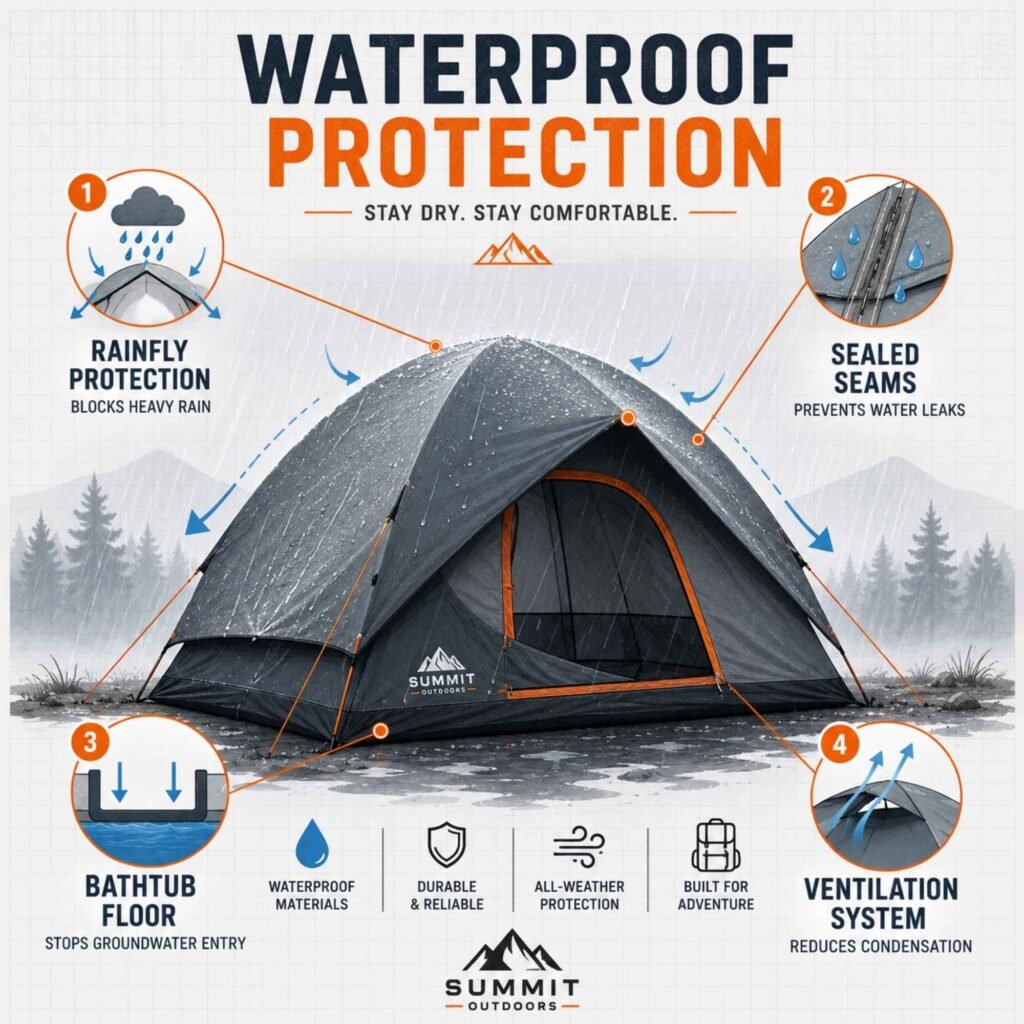
Waterproof tents work by combining water-resistant materials with a water-diversion design.
The main waterproof tent components include:
Waterproof Rainfly
The rainfly is the outer waterproof layer that blocks rainfall before water reaches the tent body.
Full-coverage rainflies provide better waterproof protection than partial rainflies because they extend lower around the tent perimeter.
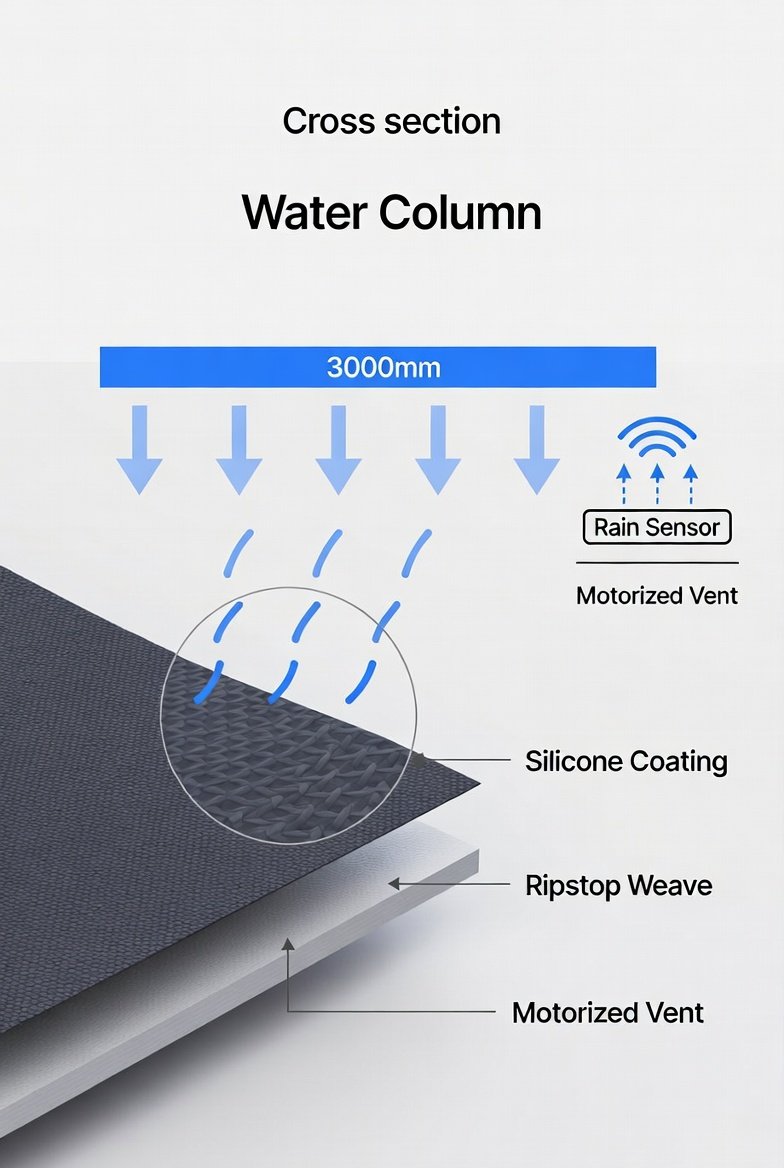
Hydrostatic Head Rating
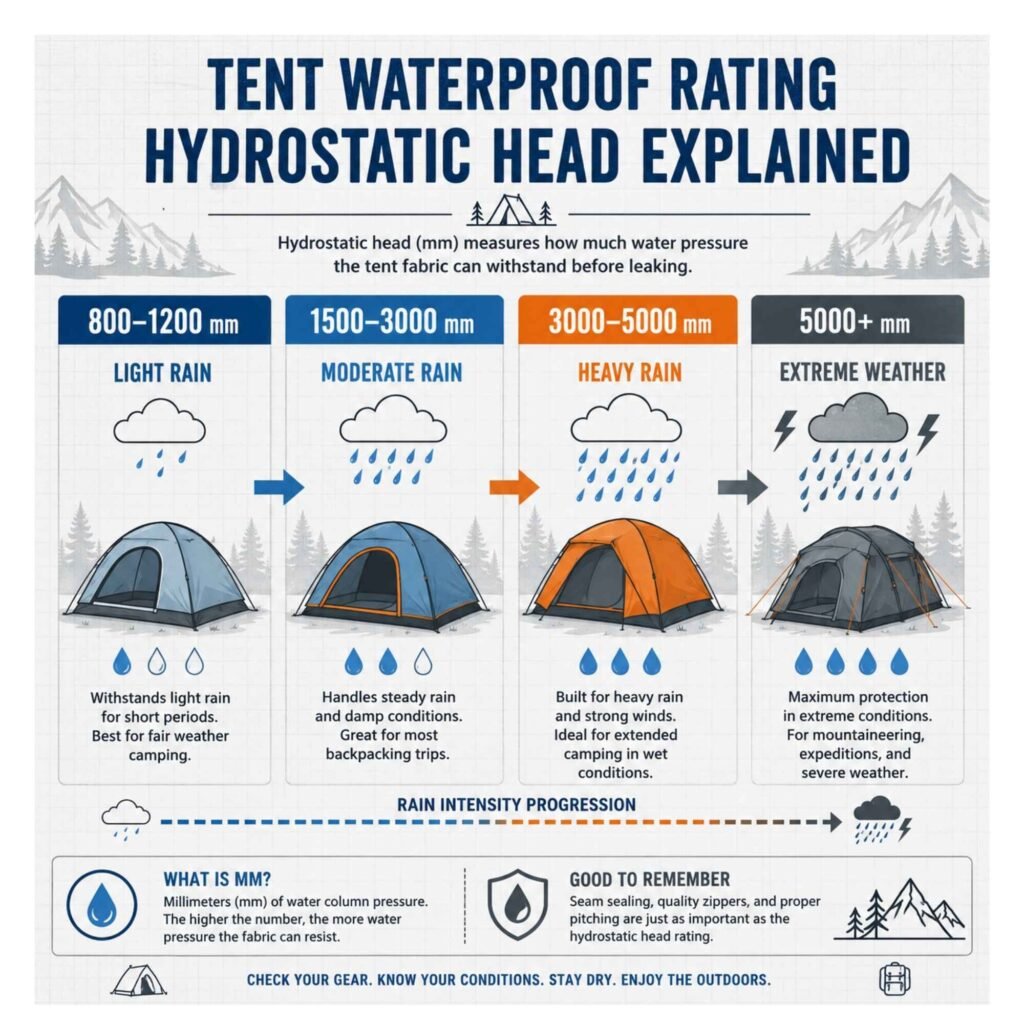
Hydrostatic head measures waterproof resistance in millimeters.
Higher ratings resist heavier rainfall and pressure.
Waterproof Rating Guide
| Waterproof Rating | Weather Resistance |
|---|---|
| 800–1,200 mm | Light rain |
| 1,500–3,000 mm | Moderate rain |
| 3,000–5,000 mm | Heavy rain |
| 5,000+ mm | Extreme weather |
Backpacking tents usually range from 1,500–3,000 mm, while expedition tents often exceed 5,000 mm.
Sealed Seams
Tent seams are common leak points. Waterproof tents use:
- Taped seams
- Welded seams
- Seam sealant coatings
Fully sealed seams prevent water penetration during prolonged exposure to rain.
Bathtub Floor Design
A bathtub floor curves upward along the tent edges to stop groundwater from entering the shelter.
Higher bathtub walls improve flood resistance during storms.
Ventilation System
Ventilation reduces internal condensation caused by breathing, wet gear, and humid air.
The best waterproof tents include:
- Roof vents
- Mesh panels
- Cross-ventilation windows
- Adjustable airflow systems
Good airflow prevents moisture buildup inside the tent.
Best Types of Waterproof Tents
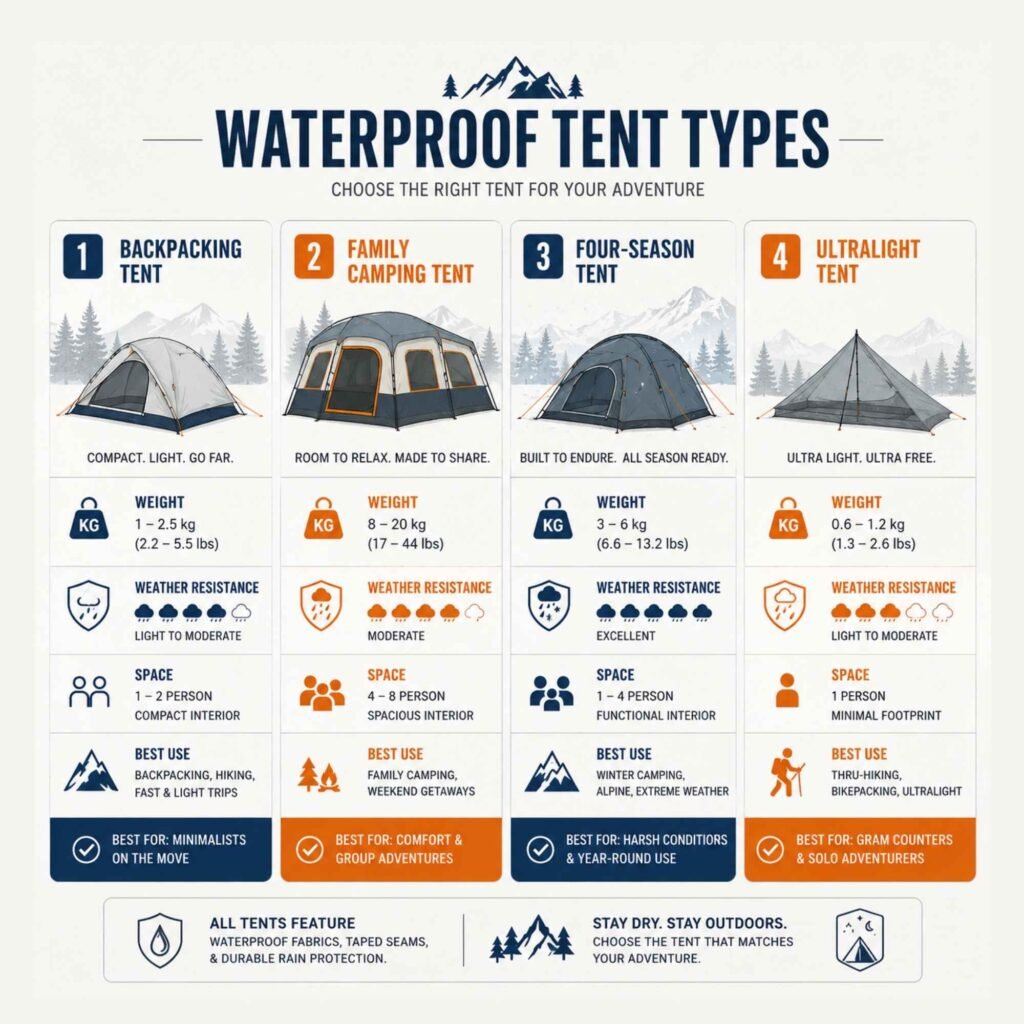
Different waterproof tents serve different camping conditions.
Backpacking Waterproof Tents
Backpacking waterproof tents prioritize lightweight construction and compact storage.
Best for:
- Hiking
- Trekking
- Thru-hiking
- Long-distance camping
Key features include:
- Lightweight poles
- Compact packed size
- Fast setup
- Rain-resistant vestibules
Most backpacking tents balance waterproofing with low weight.
Family Waterproof Tents
Family waterproof tents prioritize interior space, comfort, and storage.
Best for:
- Car camping
- Group camping
- Long campsite stays
Family waterproof tents often include:
- Multiple rooms
- Large vestibules
- Tall ceilings
- Large rainflies
- Enhanced ventilation
Larger tents require stronger waterproof engineering because larger surfaces collect more rainwater and wind pressure.
Four-Season Waterproof Tents
Four-season waterproof tents handle:
- Snow
- Heavy rain
- High wind
- Freezing temperatures
These tents use:
- Reinforced poles
- Heavier fabrics
- Snow skirts
- Aerodynamic structures
Four-season tents provide maximum weather resistance but increase weight.
Ultralight Waterproof Tents
Ultralight waterproof tents reduce pack weight for minimalist backpackers.
Most ultralight tents use:
- Silicone-coated nylon
- Dyneema composite fabric
- Single-wall structures
- Minimal pole systems
Ultralight tents sacrifice some interior comfort for portability.
Best Waterproof Tent Features to Look For
The best waterproof tents combine material quality, structural strength, and moisture control.
High-Denier Fabric
Higher denier fabric improves durability and puncture resistance.
Common tent fabrics include:
- Polyester
- Ripstop nylon
- Silicone nylon
- Dyneema composite fabric
Ripstop fabrics resist tearing during storms and rough terrain use.
Aluminum Tent Poles
Aluminum poles perform better than fiberglass poles in wind and heavy rain.
Aluminum poles:
- Bend without snapping easily
- Resist corrosion
- Improve structural stability
Full-Coverage Rainfly
A full rainfly protects:
- Tent walls
- Entry doors
- Ventilation openings
- Gear storage areas
Short rainflies expose sidewalls to wind-driven rain.
Vestibules
Vestibules create protected gear storage outside the sleeping area.
Vestibules reduce moisture transfer inside the tent by keeping wet boots, packs, and clothing outside the sleeping compartment.
Ventilation Panels
Ventilation reduces:
- Condensation
- Heat buildup
- Humidity accumulation
- Interior moisture
Mesh ceiling panels improve airflow without sacrificing rain protection.
Best Waterproof Tent Brands
Several tent manufacturers specialize in waterproof camping shelters.
MSR Waterproof Tents
MSR waterproof tents focus on backpacking and alpine performance.
Popular MSR waterproof tents include:
- Hubba Hubba series
- Access series
- Remote series
MSR tents balance lightweight construction with storm resistance.
Big Agnes Waterproof Tents
Big Agnes waterproof tents prioritize lightweight backpacking comfort.
Key strengths include:
- Large vestibules
- Lightweight materials
- High ventilation performance
- Easy setup systems
Hilleberg Waterproof Tents
Hilleberg produces expedition-grade waterproof tents for extreme weather.
Hilleberg tents use:
- Kerlon fabrics
- Reinforced tunnel structures
- Heavy-duty pole systems
These tents perform exceptionally in snow and wind conditions.
Nemo Waterproof Tents
Nemo waterproof tents combine comfort-focused design with weather protection.
Nemo tents often include:
- Spacious interiors
- Advanced airflow systems
- Durable waterproof floors
- Lightweight backpacking designs
How to Choose the Best Waterproof Tent
The best waterproof tent depends on weather exposure, trip duration, camper count, and terrain type.
Choose Tent Capacity Carefully
A 2-person tent usually fits:
- 2 sleeping pads
- Minimal gear storage
For comfort, many campers size up by one capacity level.
Example:
- 2 campers → 3-person tent
- 4 campers → 5-person tent
Extra space improves airflow and reduces condensation.
Match the Tent to Climate Conditions
Different climates require different waterproof strengths.
Wet Forest Camping
Choose:
- Strong rainfly coverage
- Ventilation-heavy design
- Elevated bathtub floor
Mountain Camping
Choose:
- Wind-resistant structure
- Reinforced poles
- Four-season durability
Summer Camping
Choose:
- Breathable mesh
- Lightweight fabrics
- Moderate waterproof rating
Evaluate Packed Weight
Backpackers prioritize lightweight waterproof tents.
Car campers prioritize:
- Interior comfort
- Height
- Storage
- Setup simplicity
How to Set Up a Waterproof Tent Properly
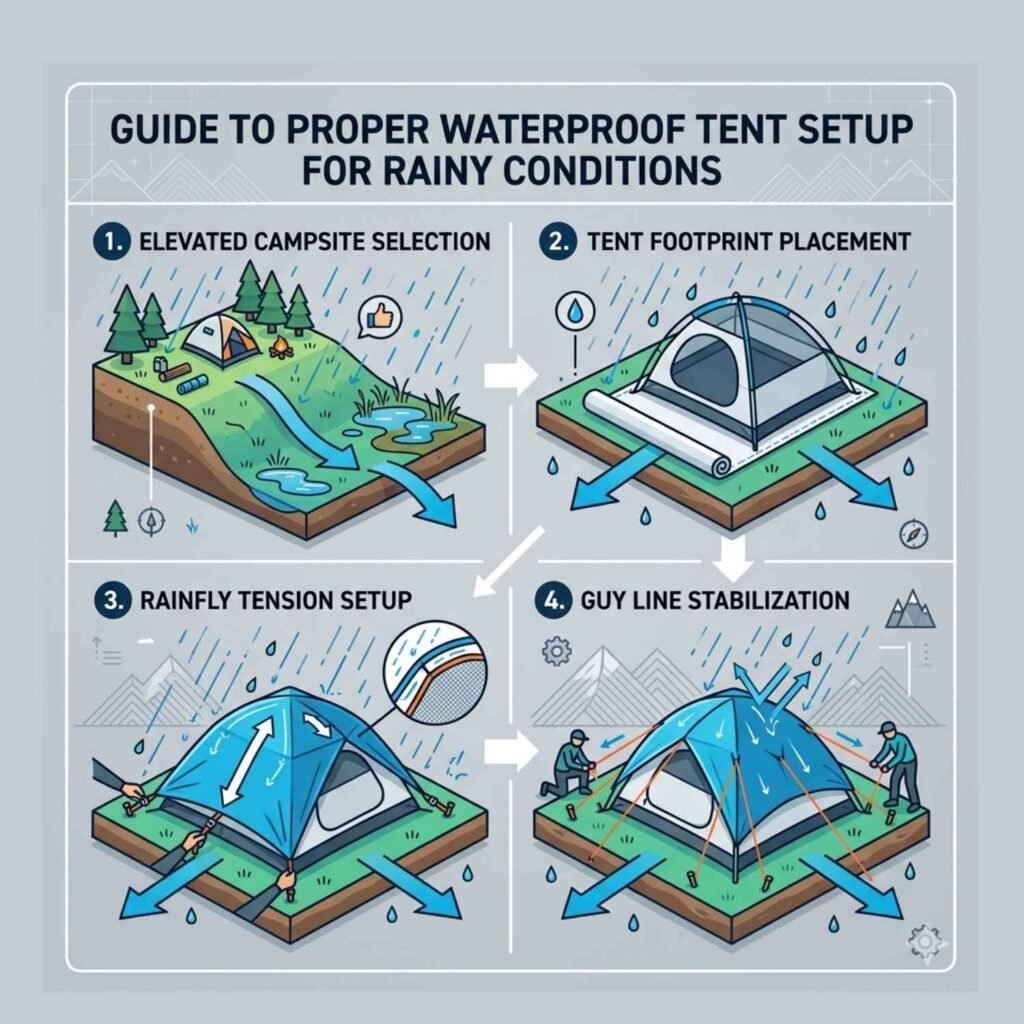
Correct tent setup improves waterproof performance.
Choose Elevated Ground
Set up tents on slightly elevated terrain to avoid water pooling.
Avoid:
- Valleys
- Dry creek beds
- Mud basins
- Flood-prone depressions
Use a Tent Footprint
A footprint protects the tent floor from:
- Abrasion
- Sharp rocks
- Ground moisture
Footprints also improve waterproof durability.
Tension the Rainfly Correctly
Loose rainflies collect water.
Tight rainfly tension helps rain slide away from the tent surface.
Secure Guy Lines
Guy lines improve:
- Wind resistance
- Rainfly tension
- Structural stability
Strong guy line positioning reduces fabric sagging during storms.
How to Maintain a Waterproof Tent
Waterproof tents lose performance without maintenance.
Dry the Tent Completely
Never store a wet tent.
Moisture causes:
- Mold
- Mildew
- Fabric breakdown
- Odor development
Air-dry tents fully before storage.
Clean Dirt and Debris
Use mild soap and soft sponges to clean tent surfaces.
Avoid harsh chemicals because aggressive detergents damage waterproof coatings.
Reapply Waterproof Coatings
Tent waterproof coatings wear down over time.
Reapply:
- DWR coating
- Seam sealant
- Waterproof sprays
according to manufacturer guidelines.
Store the Tent Properly
Store tents loosely in breathable storage bags.
Compressed storage weakens fabric coatings and tent elasticity.
Waterproof Tent Problems and Solutions
Why Do Waterproof Tents Leak?
Waterproof tents leak because of:
- Damaged seams
- Worn waterproof coatings
- Improper setup
- Fabric punctures
- Rainfly contact with tent walls
Most leaks occur after years of UV exposure and improper storage.
Why Does Condensation Form Inside Waterproof Tents?

Condensation forms when warm humid air contacts cold tent surfaces.
Reduce condensation by:
- Opening vents
- Increasing airflow
- Avoiding wet gear inside
- Using mesh ventilation
Condensation is different from leaking.
Best Waterproof Camping Practices
Experienced campers combine waterproof tents with waterproof camping habits.
Keep Wet Gear Outside
Store wet boots and rain jackets in vestibules instead of inside sleeping areas.
Use Waterproof Stuff Sacks
Protect clothing and electronics with dry bags or waterproof sacks.
Avoid Touching Tent Walls
Touching wet tent walls transfers moisture inside.
Double-wall tents reduce this issue significantly.
Monitor Weather Conditions
Check weather forecasts before camping in exposed environments.
Storm preparation improves campsite safety and tent longevity.
Waterproof Tent FAQs
Are all tents waterproof?
No. Some tents are only water-resistant. Waterproof tents use sealed seams, coated fabrics, and waterproof floors.
What is the best waterproof rating for tents?
A waterproof rating between 2,000 mm and 5,000 mm performs well in heavy rain conditions.
Are canvas tents waterproof?
Canvas tents are naturally water-resistant and become more waterproof after proper seasoning and treatment.
What is better: polyester or nylon tents?
Polyester resists UV damage better. Nylon usually offers lighter weight and higher strength.
Do expensive waterproof tents last longer?
High-end waterproof tents usually use stronger fabrics, better seam construction, and more durable coatings, which improve lifespan.
Final Verdict: Which Waterproof Tent Is Best?
The best waterproof tent depends on camping style, climate exposure, and durability requirements.
For backpacking, lightweight waterproof tents with strong rainflies and ventilation perform best.
For family camping, large waterproof tents with vestibules and full rainfly coverage improve comfort.
For extreme weather, four-season waterproof tents with reinforced structures deliver maximum protection.
A waterproof tent should provide:
- Reliable rain protection
- Strong airflow
- Durable materials
- Stable structure
- Long-term weather resistance
Campers who invest in a high-quality waterproof tent experience better sleep, safer outdoor conditions, and more reliable shelter during changing weather.