
Portable power stations are the central energy systems for modern camping, overlanding, and off-grid living. In 2026, they no longer exist to charge phones.
They power Starlink terminals, induction cooktops, portable air conditioners, electric coolers, and medical-grade electronics in remote environments.
If you rely on pre‑2022 battery assumptions, your system is underpowered, inefficient, and short-lived.
This guide is the foundational knowledge hub for all portable power research on GadgetCamping. Every recommendation, review, and calculator on this site inherits its standards from this page.
What Is a Portable Power Station?
A portable power station is a battery-based energy storage system that delivers AC and DC electricity using internal batteries, inverters, and charge controllers.
Portable power stations store energy from wall outlets, vehicle alternators, or solar panels and distribute it safely to off-grid appliances.
Core components include:
- Battery pack (energy storage)
- Inverter (DC to AC conversion)
- Charge controller (solar and input regulation)
- Battery Management System (BMS)
Why Portable Power Changed After 2022
Off-grid energy demand increased faster than battery capacity marketing.
Modern camping loads include:
- Starlink satellite terminals (50–75W continuous)
- Induction cooktops (1200–1800W peak)
- Portable air conditioners (400–800W sustained)
- Compressor fridges (40–70W cycling)
Systems designed around phone charging and LED lights no longer meet real-world requirements.
The 2026 Standard: Why Battery Chemistry Matters More Than Capacity
Battery chemistry determines how long a power station lasts, how safely it operates, and how efficiently it performs across temperatures.
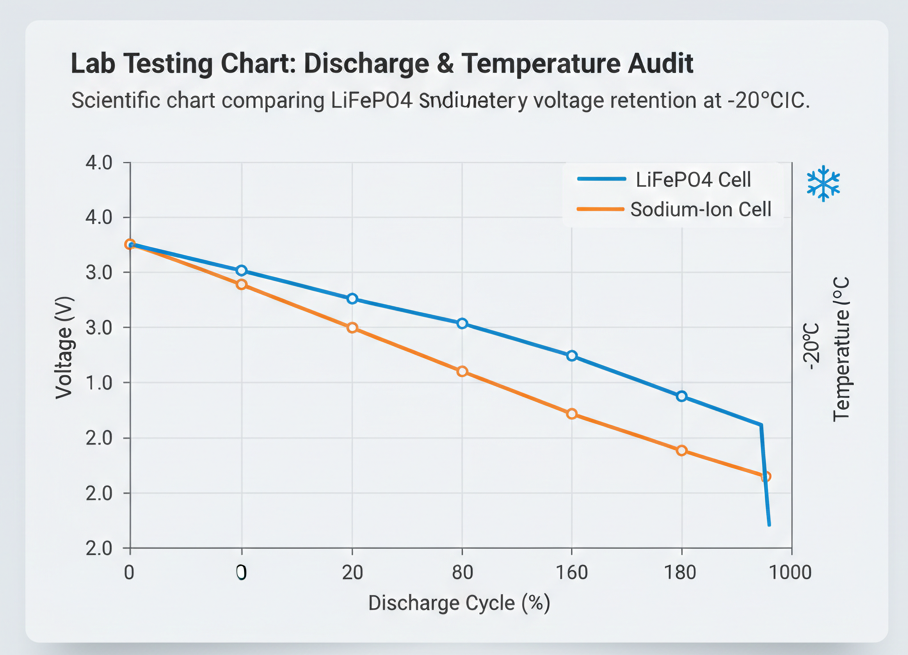
LiFePO4 Battery Chemistry (Lithium Iron Phosphate)
LiFePO4 is a lithium-based battery chemistry optimized for longevity, safety, and thermal stability.
- Lifespan: 3,000–6,000 cycles to 80% capacity
- Safety: High resistance to thermal runaway and puncture
- Performance: Flat discharge curve for consistent voltage output
LiFePO4 is the current industry standard for reliable portable power systems.
Sodium-Ion Battery Chemistry
Sodium-Ion batteries use sodium salts instead of lithium, improving cold-weather discharge and reducing material costs.
- Cold performance: Up to 90% discharge at −20°C
- Cost: ~20% cheaper to manufacture than lithium-based systems
- Best use: Winter camping and alpine environments
Solid-State Battery Technology
Solid-state batteries replace liquid electrolytes with solid materials to increase energy density and reduce weight.
- Weight reduction: ~35%
- Energy density: Up to 2× current lithium systems
- Status: Early adoption phase
Usable Energy vs Advertised Capacity
Advertised watt-hours represent stored energy, not usable output.
Real-world efficiency depends on conversion losses, discharge rates, and thermal conditions.
Cost-per-Cycle Comparison
| Unit Type | Retail Price | Lifecycle | Cost per Cycle |
|---|---|---|---|
| Standard Lithium | $500 | 1,000 cycles | $0.50 |
| Premium LiFePO4 | $1,200 | 4,000 cycles | $0.30 |
Higher upfront cost delivers lower lifetime energy cost.
Inverter Loss Explained: AC vs DC Power
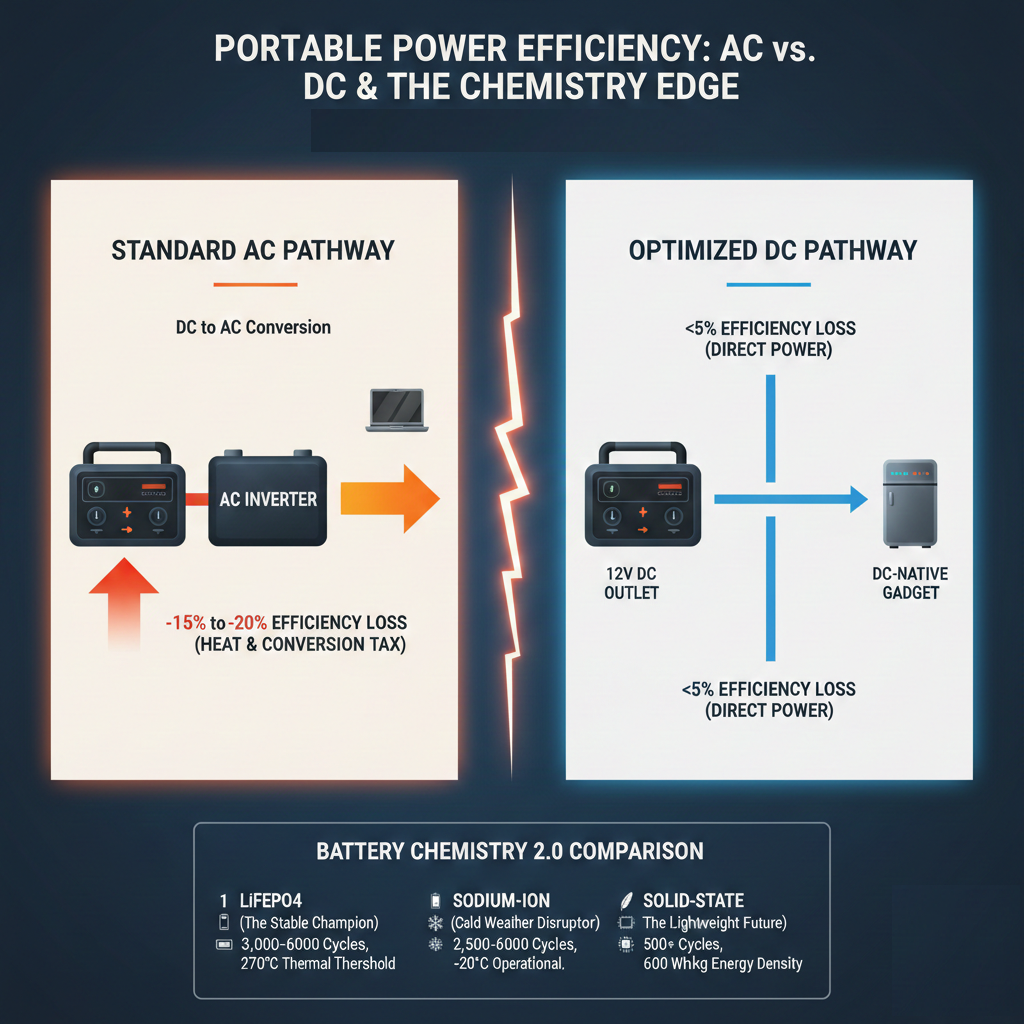
AC outlets convert DC battery power into AC electricity, wasting energy as heat.
- Average inverter loss: 15–20%
- Measured loss: ~18% under sustained loads
Best Practice
Use DC-native appliances whenever possible.
- 12V fridges
- USB-C PD cooking devices
- DC lighting systems
Bypassing the inverter can extend runtime by up to two hours per charge cycle.
How to Choose the Right Portable Power Station (2026 Decision Guide)
Quick Recommendation Matrix
| Use Case | Recommended Capacity | Battery Chemistry |
| Phones, lights | 500–700Wh | LiFePO4 |
| Fridge + laptop | 1000–1500Wh | LiFePO4 |
| Starlink + induction | 2000–3000Wh | LiFePO4 |
| Winter camping | 1000–2000Wh | Sodium-Ion |
| Weight-critical setups | 800–1500Wh | Solid-State |
Trunk-to-Branch Power System Guides
This guide anchors all GadgetCamping portable power content:
- Power Station Capacity Calculator – Match energy storage to group size and trip length
- Portable Solar Chargers – Off-grid energy generation
- Camping Fridges & Power Draw – Managing continuous loads
- DC Cooking Equipment – Efficiency-first camp kitchens
Safety, Storage, and Charging FAQs
Can I leave my power station in a hot car?
No. Temperatures above 40°C accelerate battery degradation and trigger thermal protection systems. Store units in shaded, ventilated locations.
How do I calculate solar recharge time in winter?
Divide battery capacity by actual solar output. Winter solar yield is typically 30% lower.
A 1000Wh battery with a 200W panel producing 140W requires approximately 7.1 hours to recharge.
Is pass-through charging safe?
Yes, if the unit includes an integrated Battery Management System (BMS). High-draw appliances may increase internal heat during pass-through operation.