
How Many Watts Does a Camping Fridge Use?

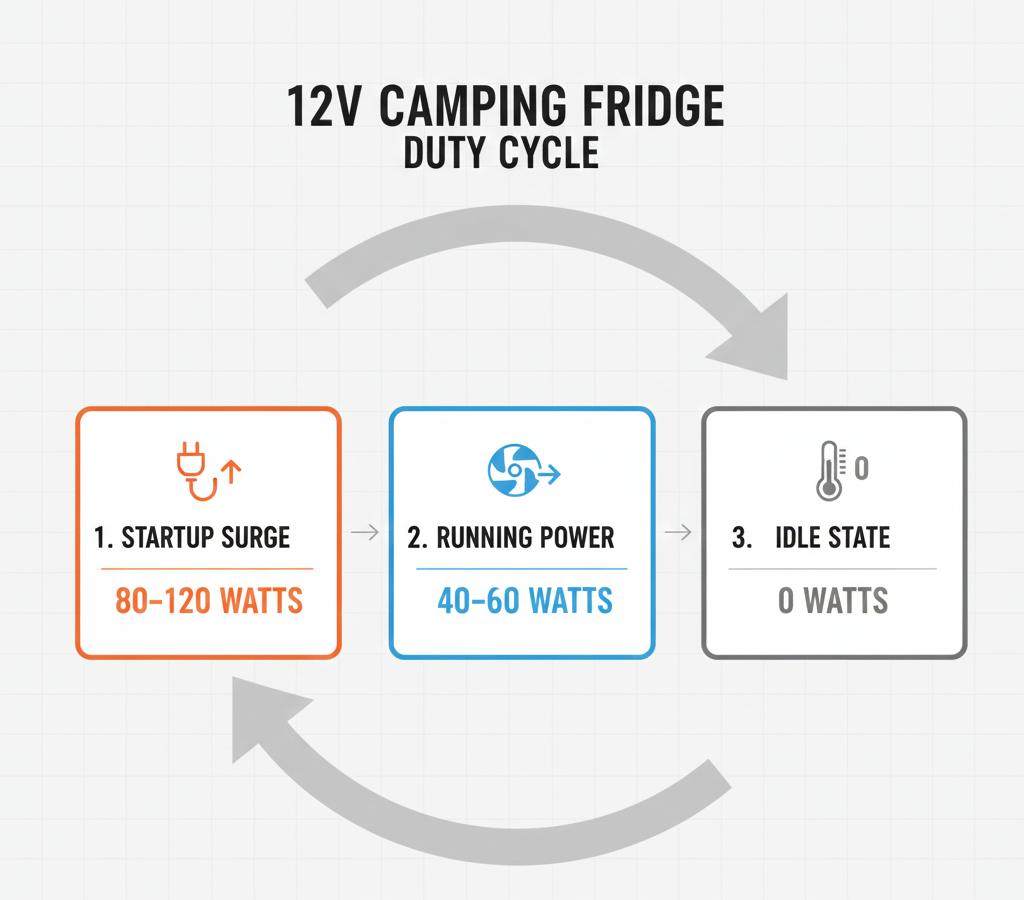
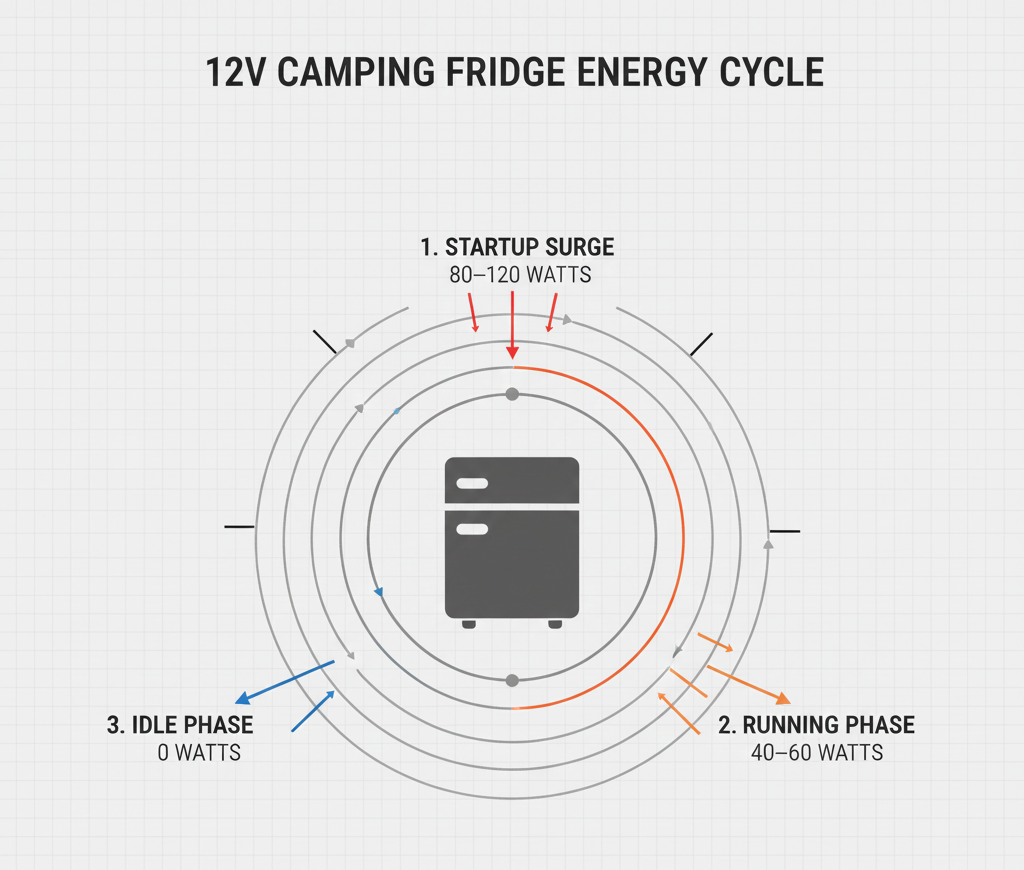
A typical 12V camping fridge uses 40 to 60 watts while the compressor is running. While this “running wattage” is the peak draw, the average consumption is lower, typically ranging from 15 to 30 watt-hours per hour because the compressor cycles on and off based on internal temperature.
What Factors Determine Camping Fridge Wattage?
To determine the exact power draw of a portable refrigerator, you must analyze specific environmental and mechanical variables. There are three main factors that influence daily energy consumption.
Ambient Temperature and Cooling Efficiency
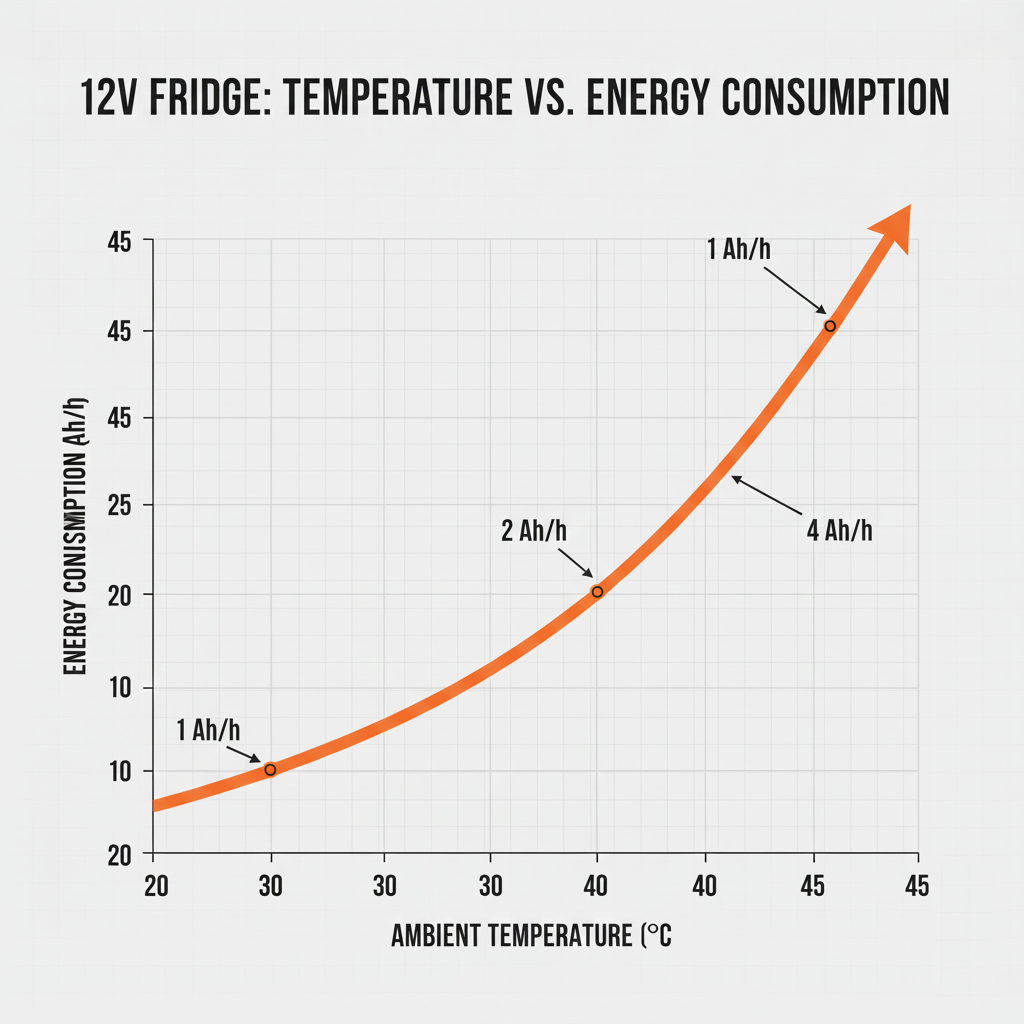
Higher external temperatures increase the duty cycle of the compressor. A camping fridge cycles three times more often at 43°C compared to 21°C. When the ambient temperature rises, the unit requires more watt-hours to maintain a set internal temperature.
Insulation Thickness and Compressor Technology
Thick polyurethane foam insulation reduces thermal leakage. Units with 60 mm insulation stay cold longer without power compared to budget models with 35 mm walls.
Additionally, modern variable-speed compressors eliminate the high-draw “startup surge” associated with older single-speed motors.
How to Calculate Your Fridge’s Daily Watt-Hour Usage
Calculating total energy demand is essential for sizing a solar power system. Use the following numeric values to estimate your needs.
Camping Fridge Power Consumption by Category
This table identifies the running wattage and average daily electrical draw (measured in Amp-hours) for 12V compressor camping fridges based on internal capacity and entity size. [cite: 70]
| Fridge Category | Capacity (Liters) | Running Wattage (W) | Avg. Daily Draw (Ah) |
|---|---|---|---|
| Small Fridge | 15–35L | 35–45W | 15–25 Ah |
| Medium Fridge | 36–55L | 45–60W | 25–35 Ah |
| Large Fridge | 60L+ | 60–90W | 40–60 Ah |
Expansion of Evidence: Daily draw (Ah) is calculated based on a 25°C ambient temperature. Energy consumption increases by approximately 5% for every 1°C rise in external heat, affecting the compressor duty cycle. [cite: 72, 37]
To convert Amp-hours (Ah) to Watt-hours (Wh), multiply the Ah by the voltage (12V). For example, a medium fridge drawing 30Ah per day uses 360 watt-hours daily.
How to Reduce Fridge Power Consumption
Following specific maintenance steps decreases the total load on your battery. Use these four methods to optimize efficiency.
- Pre-chill all food and beverages in a domestic refrigerator before loading the camping unit.
- Maintain a minimum of 10cm clearance around all ventilation ports to prevent heat entrapment.
- Keep the fridge unit full to utilize thermal mass, which prevents rapid temperature spikes.
- Park your vehicle or portable power station in the shade to lower the surrounding ambient heat.
What Size Solar Panel Runs a Camping Fridge?
To maintain a continuous power supply for a 40-watt fridge, you must match the energy input to the daily draw. According to 2026 off-grid standards, a 100W solar panel is the minimum requirement for a small fridge in ideal sun.
However, for medium or large fridges, a 200W panel is necessary to account for clouds and low-light conditions.
For comprehensive ratings on high-efficiency hardware, refer to the Best Solar Panels for Camping 2026: The Ultimate Guide to Lightweight & Durable Off‑Grid Power.
