
How to Optimize Camping Tent Ventilation

Tent ventilation is the process of maintaining a constant exchange of interior and exterior air to regulate temperature and moisture levels. This exchange prevents condensation and ensures a safe breathable environment.
High-quality ventilation systems utilize the physical principles of convection and vapor pressure to remove moisture from exhaled air.
3 Scientific Mechanisms of Tent Airflow
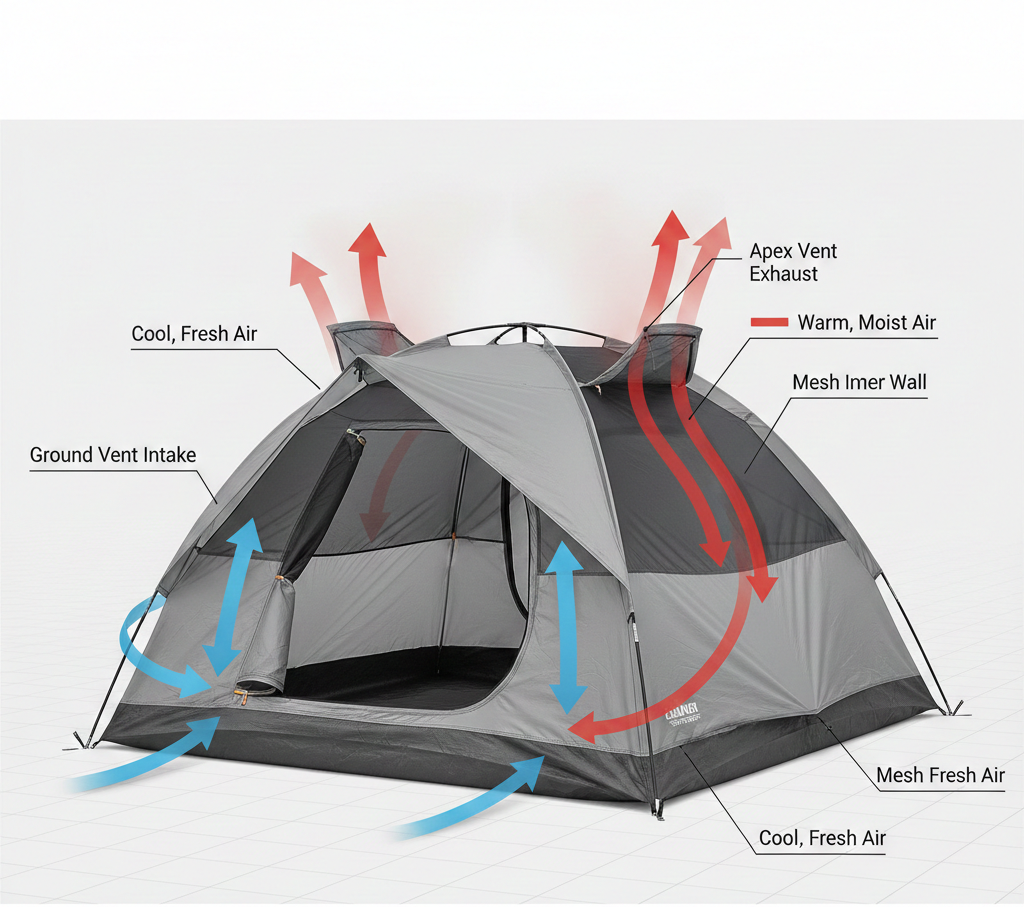
To achieve information responsiveness, a source must address the underlying physics of the knowledge domain. There are 3 main mechanisms that govern how air moves through a camping shelter.
- Convection: Warm air rises because it is less dense than cool air.
- Cross-Ventilation: Wind creates a pressure differential that pulls fresh air through the structure.
- Vapor Pressure: Moisture moves from areas of high concentration to low concentration.
Convection is observed to be 15% more effective when apex vents remain unobstructed. According to engineering studies on outdoor shelters, a 2-person tent requires 280 liters of fresh air per hour to maintain optimal oxygen levels.
Structural Meronyms: Essential Ventilation Components
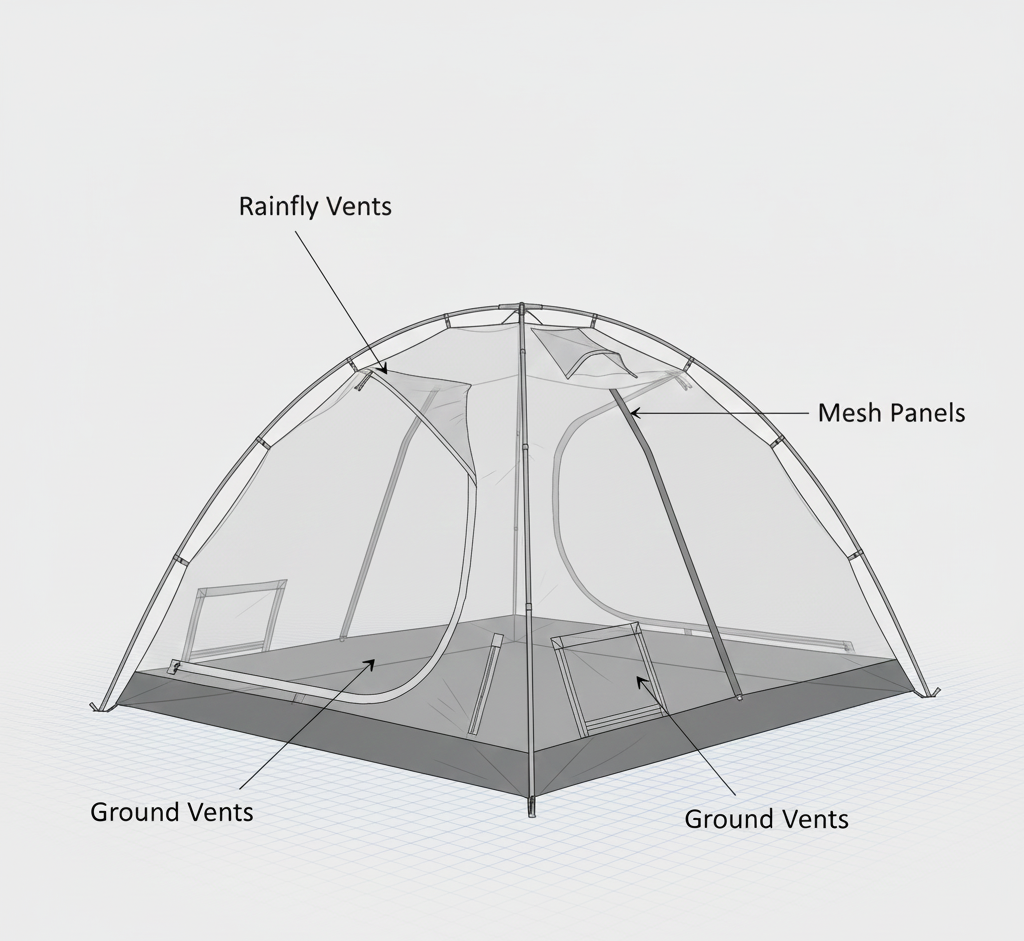
A camping tent is a holonym composed of several functional meronyms. Each component serves a specific role in the ventilation contextual layer.
- Rainfly Vents: These are openings at the highest point of the tent that exhaust warm, moist air.
- Ground Vents: These intakes allow cool air to enter the sleeping area from the perimeter.
- Mesh Panels: No-see-um mesh acts as a semi-permeable membrane for gas exchange.
- Vestibules: This outer area provides a buffer zone that shields vents from precipitation while allowing airflow.
How to Ventilate a Tent in High Humidity
Humidity increases the semantic distance between comfort and safety in camping. To manage moisture in 80%+ humidity, specific adjustments are required.
Orient the tent toward the prevailing wind, if the terrain allows for safe anchoring. Opening the vestibule doors increases airflow by 30% compared to closed configurations. Avoid touching the interior tent walls, because physical contact breaks the surface tension of accumulated moisture.
Fabric Type and Moisture Vapor Transmission Rate (MVTR)
The attribute prominence of the tent fabric is high, as the material dictates the base level of breathability. Experts use specific data points to evaluate fabric performance.
| Fabric Type | MVTR (g/m²/24h) | Air Permeability | Purpose |
| Polyester (PU Coated) | 0 | None | Waterproofing |
| Breathable Nylon | 15,000 | High | 4-Season Use |
| Polycotton Canvas | 12,000 | Medium | Thermal Regulation |
The table above illustrates that PU-coated polyester provides the lowest moisture transmission. Use breathable nylon for high-exertion or humid environments to maximize vapor escape.
Condensation vs. Leakage: Identifying Moisture Sources
Moisture inside a tent is usually the result of condensation rather than structural failure. There are 2 primary sources of interior moisture.
- Respiration: A single adult exhales 40 milliliters of water per hour during sleep.
- Transpiration: Wet gear and damp soil release water vapor into the air.
Identify the source of moisture by checking the rainfly. If the moisture is uniform across the interior surface, it is condensation. If the moisture is localized to a seam, it is a leak.
5 Practical Instructions for Maximizing Airflow
Follow these instructions to ensure consistent air exchange throughout the night.
- Clear all debris from ground-level mesh panels.
- Deploy all rainfly kickstand vents to the fully open position.
- Stow wet clothing in waterproof bags outside the main sleeping area.
- Maintain a 5-centimeter gap between the rainfly and the tent body.
- Use a portable tent fan to facilitate mechanical convection.
Improving Tent Ventilation in Winter
Winter camping requires a balance between heat retention and moisture management. Improve ventilation by opening apex vents slightly, even if external temperatures are below 0°C. This prevents frost from forming on the interior mesh.
Frost accumulation reduces air permeability by 60% within 4 hours. Remove frost by shaking the tent walls before the ice melts into liquid water.
