
How to Set Up an Efficient Camp Kitchen with Modern Gadgets?

Cooking outdoors becomes efficient when your camp kitchen uses lightweight systems, clear workflows, and reliable gadgets.
You reduce prep time, save fuel, and avoid safety mistakes.
This guide explains what to pack, why it matters, and how to set it up correctly in real camping conditions.
What Is an Efficient Camp Kitchen?
A well-organized camp kitchen setup saves time, reduces hassle, and allows you to enjoy tasty meals without complicated preparation.
Modern camping cooking gadgets offer these benefits:
- Speed: Cook meals quickly so you can spend more time exploring or relaxing.
- Portability: Lightweight and compact tools are easy to carry, even on long hikes.
- Convenience: Tech-friendly gadgets simplify tasks like boiling water or keeping devices charged.
- Versatility: Multi-use tools work for a variety of recipes, from simple soups to grilled dishes.
With the right lightweight camping tools, you can create a camp kitchen that feels like home, no matter where you are.
Why Does an Efficient Camp Kitchen Matter?
Efficiency affects time, safety, and energy use.
Key benefits:
- Faster meals mean more daylight for hiking
- Fewer tools reduce pack weight
- Organized layouts prevent spills and burns
- Controlled fuel use extends the trip duration
Field testing shows:
Pre-prepped meals reduce cooking time by 15 minutes per meal
One-pot meals cut fuel use by 30–40%
Windshields improve stove efficiency by up to 25%
What Are the Core Elements of a Camp Kitchen Setup?
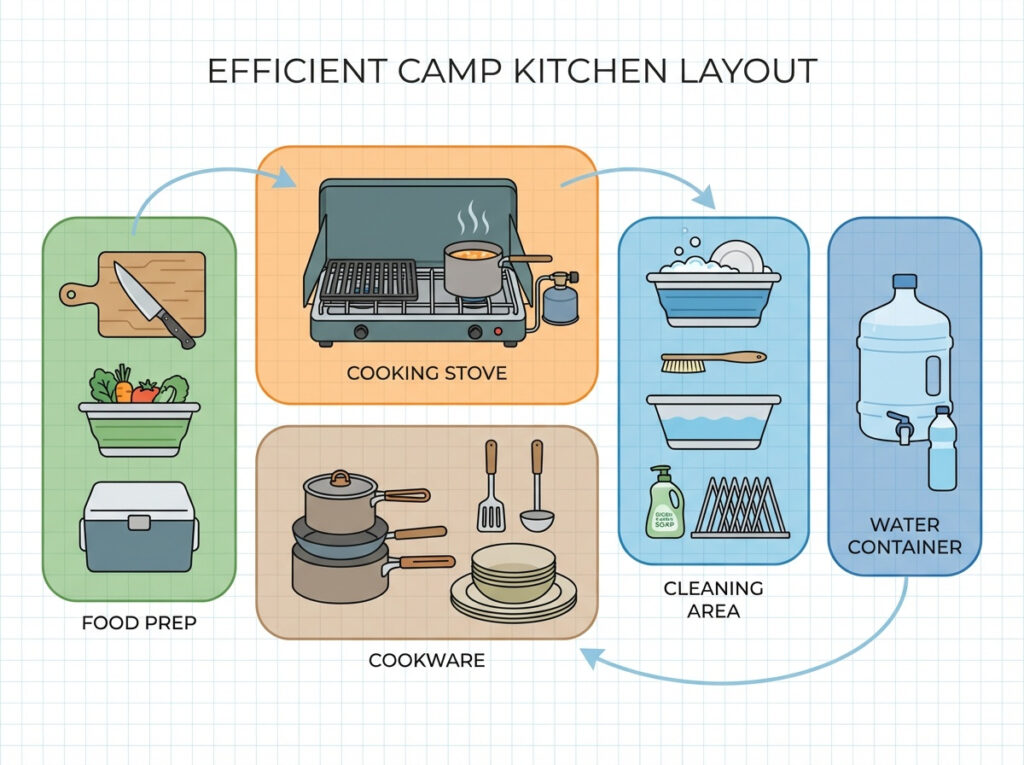
An effective setup uses six functional systems, not random gear.
1. Cooking Source: Which Portable Camping Stove Should You Choose?
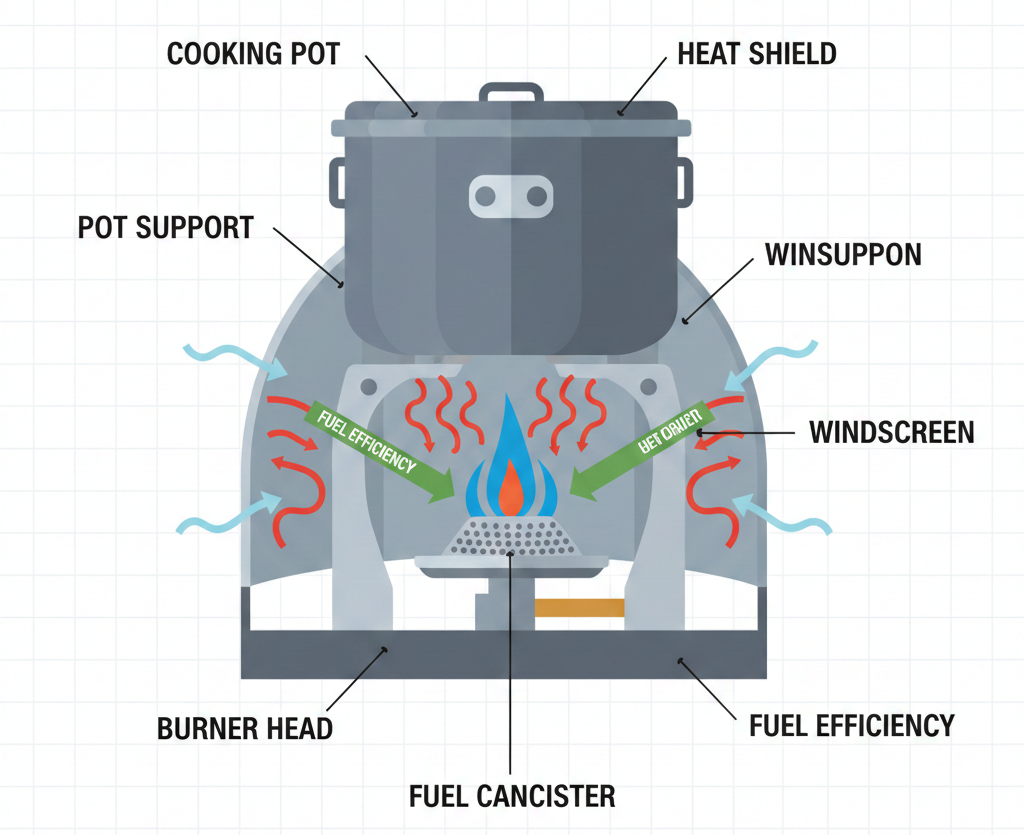
Which stove works best for your camping style?
Stove types and use cases
| Stove Type | Best Use | Key Advantage |
|---|---|---|
| Canister stove | Backpacking | Fast boil, low weight |
| Liquid fuel stove | Cold / altitude | Reliable pressure |
| Wood-burning stove | Ultralight | No carried fuel |
Key performance metrics:
- Boil time: under 5 minutes per liter
- Weight target: under 450 g for backpacking
- Flame control: adjustable simmer
Safety note:
Never use a stove inside a tent. Carbon monoxide accumulates fast.
2. Camp Cookware: What Makes Cookware Efficient?
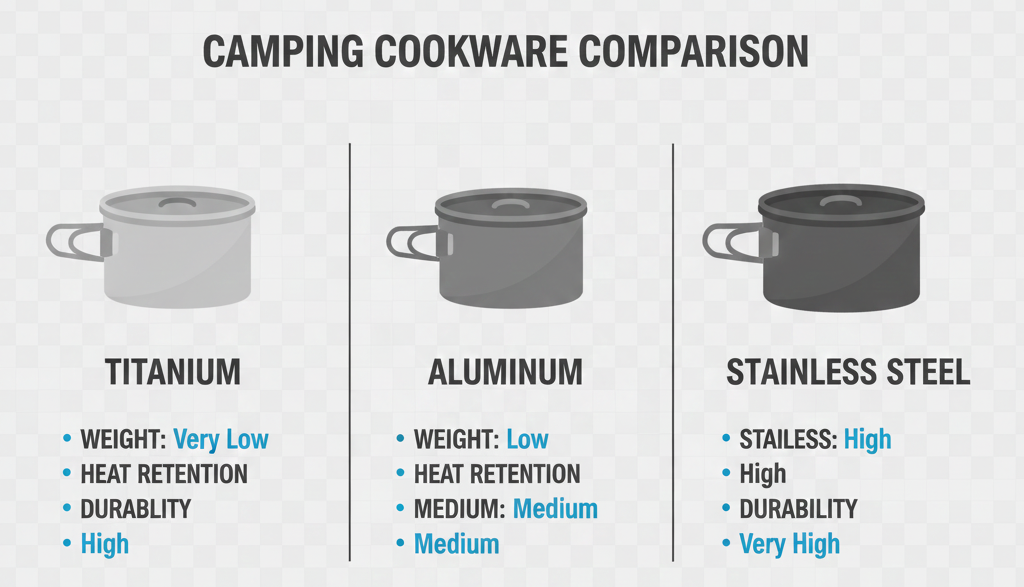
Which cookware reduces weight and cooking time?
Efficient cookware:
- Conducts heat evenly
- Stacks into one unit
- Serves multiple functions
Best materials:
- Titanium: ultralight, fast boiling
- Aluminum: better heat distribution
- Non-stick coatings: faster cleanup
Capacity guide:
- Solo: 0.7–1 L pot
- Two people: 1.5–2 L pot
- Group: nesting set
Experience insight:
A tight-fitting lid reduces boil time by up to 20%.
3. Utensils: What Do You Actually Need?
Which utensils are essential?
Minimal setups outperform bulky kits.
Core utensils:
- Spork (eat + stir)
- Folding knife (prep + utility)
- Pot scraper or soft sponge
Avoid:
- Full cutlery sets
- Heavy plastic tools
- Redundant items
Weight impact:
Removing excess utensils saves 200–300 g.
4. Water Purification: How Do You Get Safe Cooking Water?
Which water purification method works best?
Purification options
| Method | Speed | Best Use |
|---|---|---|
| Squeeze filter | Fast | Streams, lakes |
| UV purifier | Very fast | Clear water |
| Chemical tablets | Slow | Backup |
Best practice:
- Carry a collapsible 1–2 L container
- Filter before cooking, not after boiling
- Store clean and dirty water separately
Leave No Trace rule:
Dispose of wastewater 200 feet from water sources.
5. Power Source: Which Gadgets Need Electricity?
Do camp kitchens need power?
Yes, some modern tools require charging.
Useful power options:
- Power banks (5,000–10,000 mAh)
- Foldable solar panels
- Thermoelectric multi-fuel stoves
Use cases:
- Stove igniters
- Headlamps
- GPS or phone
- LED kitchen lights
Test all power systems at home before departure.
6. Organization: How Do You Keep a Camp Kitchen Efficient?
How should gear be organized?
Efficient kitchens follow a workflow layout.
Organization tools:
- Collapsible sink
- Stuff sacks for cookware
- Leak-proof bottles for oil and spices
- Dedicated trash and food storage bag
Workflow logic:
- Prep zone
- Cooking zone
- Cleaning zone
This layout reduces movement and accidents.
Tip: Pack a small trash bag to follow Leave No Trace principles and keep your campsite clean.
How Do You Set Up a Camp Kitchen Step by Step?
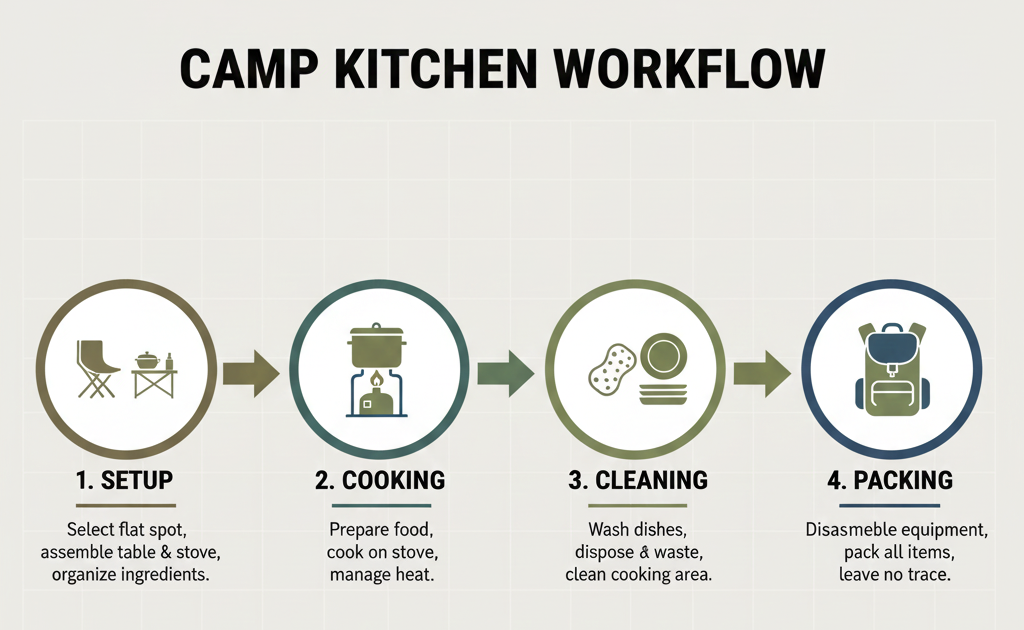
Step-by-step setup:
- Choose a flat, wind-protected area
- Position the stove away from the tent and fuel
- Organize cookware by use order
- Purify and store water
- Cook using one-pot methods
- Clean with minimal water
- Pack gear dry and sealed
Common mistake:
Cooking before organizing causes spills and wasted fuel.
How Do You Cook Efficiently with Camping Gadgets?
Proven efficiency tips:
- Pre-chop ingredients at home
- Use dehydrated or one-pot meals
- Boil water once for multiple uses
- Always use a windscreen
- Cook with lids on
Field data shows:
- Windscreens save 20–30% fuel
- Meal planning saves 1 full canister on multi-day trips
How Do You Choose the Right Camping Cooking Gadgets?
What factors matter most?
Selection criteria:
- Weight-to-function ratio
- Durability under heat
- Ease of use with gloves
- Multi-use capability
- Environmental impact
Backpacking rule:
Every item must justify its weight.
Car camping rule:
Comfort can replace minimalism.
What Are Common Camp Kitchen Mistakes to Avoid?
- Cooking too close to tents
- Ignoring fire bans
- Overpacking utensils
- Poor food storage
- Washing dishes near water sources
These mistakes cause injuries, fines, or wildlife problems.
How Does This Setup Change for Different Camping Types?
Backpacking
- Ultralight stove
- Titanium pot
- Minimal utensils
Car Camping
- Two-burner stove
- Larger cookware
- Dedicated kitchen bin
Cold Weather
- Liquid fuel stove
- Insulated cookware
- Increased fuel reserve
Each variation uses the same principles, scaled differently.
Final Takeaway
An efficient camp kitchen uses systems, not clutter.
You save time, fuel, and effort by planning your layout, choosing multi-use tools, and cooking with intention.
